

Find the Best Flooring Financing Deals for Your Home Remodel
Last updated: 2026-10-16
Tackling a home makeover is a heavy lift that frequently feels like you are taking on another mortgage. When your hardwood loses its luster or linoleum begins to curl at the edges, the impulse to overhaul the space is overwhelming. You might feel a sudden rush to fix the damage immediately.
Yet, looking at a steep bill for luxury laminate or tile can be a cold bucket of water for your bank account. The price of raw materials, ranging from elite porcelain tile to top-tier engineered hardwood, can skyrocket. You must also account for the hidden costs of underlayment, subfloor prep, and various transitions.
Securing the right payment method for these improvements is just as vital as picking out a specific hue. You might need a quick injection of cash for minor fixes or a multi-year strategy to overhaul your entire residence. In 2026, the landscape of lending offers a multitude of various routes.
The path you choose to take right now determines your future peace of mind. Will this renovation stay a beautiful vision, or will it turn into a bitter weight on your shoulders? Making a smart choice ensures your project doesn’t become a source of lasting financial resentment.
Leading Providers for Flooring Loans in 2026
Selecting a lender is a bit like picking the right foundation for your new floors. If you choose poorly, the whole structure of your budget might shift unexpectedly. You want a partner that offers clarity rather than confusing fine print.
Market experts have evaluated several providers to see who truly delivers on their promises. Some focus on lightning-fast approvals, while others provide more flexible repayment structures for those on a tighter budget. It is all about finding the perfect fit for your specific project scale.
The following list represents our curated selection of the most reliable financing avenues currently available. We have looked at how these companies stack up against one another in the current economic climate. Use this ranking to help navigate your upcoming home improvement journey.
- FastLendGo
- HFS Financial
- Acorn Finance
- Wisetack
- Affirm
- Floor Daddy
Comparing the Leading Financing Providers
Hunting for the right lender involves more than just glancing at the lowest interest rate displayed on a webpage. You have to consider how quickly cash reaches your pocket and whether the paperwork will turn into a massive headache. A low rate might look enticing on paper, but the total cost can skyrocket depending on the loan term.
Consider this scenario: taking out a $10,000 loan at 10% interest over 3 years will result in roughly $1,750 in interest payments. However, if you stretch that same $10,000 loan out to 7 years, the interest climbs to nearly $4,000. It is a delicate balancing act between immediate monthly affordability and the ultimate price of the debt.
Our review process prioritized speed, ease of use, and how much a lender impacts your credit profile. We looked for transparency, favoring companies that lay their cards on the table instead of hiding sneaky fees in the fine print. Every company was measured by its ability to help everyone, from those with perfect credit to those just trying to keep their heads above water.
| Provider | Funding Range | Credit Profile | Primary Benefit |
|---|---|---|---|
| FastLendGo | $500 – $5,000+ | Good to Bad Credit | Rapid cash delivery |
| HFS Financial | see site | No equity required | Fixed low rates |
| Acorn Finance | see site | Good and Bad Credit | Zero fees for dealers |
| Wisetack | see site | Soft credit check | Up to 24-month 0% APR |
| Affirm | see site | No credit check options | Versatile payment schedules |
| Floor Daddy | see site | see site | 48 Months 0% Financing |
1. FastLendGo

When life throws a curveball, FastLendGo acts as a versatile financial bridge for various needs, including sudden home repairs. It is a lifesaver for those in a pinch who need to weigh different personal loan options without enduring an endless marathon of applications. This is the go-to choice for “emergency” situations.
Imagine you discover a sudden leak beneath your new flooring or a broken stair tread. In these moments, getting the funds quickly matters far more than chasing the absolute lowest interest rate on the market. fastlendgo.com serves as a fast-track solution for these urgent scenarios.
The platform is built to accommodate a massive range of financial backgrounds. Whether you are looking for a $500 quick fix or a $5,000 overhaul, the system is designed to pair high-income earners and those with less-than-perfect credit with suitable lenders. Their matching algorithm works hard to close the gap between your current credit score and what a lender requires.
Pros:
- Offers loan amounts ranging from $500 to $5,000 and up.
- Accepts a broad spectrum of credit scores, including fair or bad.
- Provides an efficient way to compare personal loans online.
Cons:
- Rates may not be the most competitive for individuals with excellent credit.
2. HFS Financial

HFS Financial has carved out a niche for homeowners who want to skip the nightmare of traditional equity-based lending. They are a fantastic choice for those looking to upgrade their floors without putting their primary residence up as collateral. Traditional Home Equity Lines of Credit (HELOCs) often feel intimidating because your house is the security.
If you default on a HELOC, your home is effectively on the line. HFS Financial provides a refreshing alternative that keeps the loan completely separate from your property title. It is a way to borrow money for home improvements without the heavy weight of a mortgage-backed debt hanging over your head.
The biggest selling point here is how fast the approval process moves. They focus on quick decisions, helping you transition from the “dreaming” stage to the “installing” stage without waiting weeks for a bank to digest your paperwork. This is a godsend when a contractor is ready to work but you are waiting for your funds to clear.
Pros:
- No requirement to use home equity for the loan.
- Provides stable, low-fixed interest rates.
- Rapid approval speeds help get projects moving.
Cons:
- Fixed rates might lack the flexibility of variable options in certain economic climates.
3. Acorn Finance
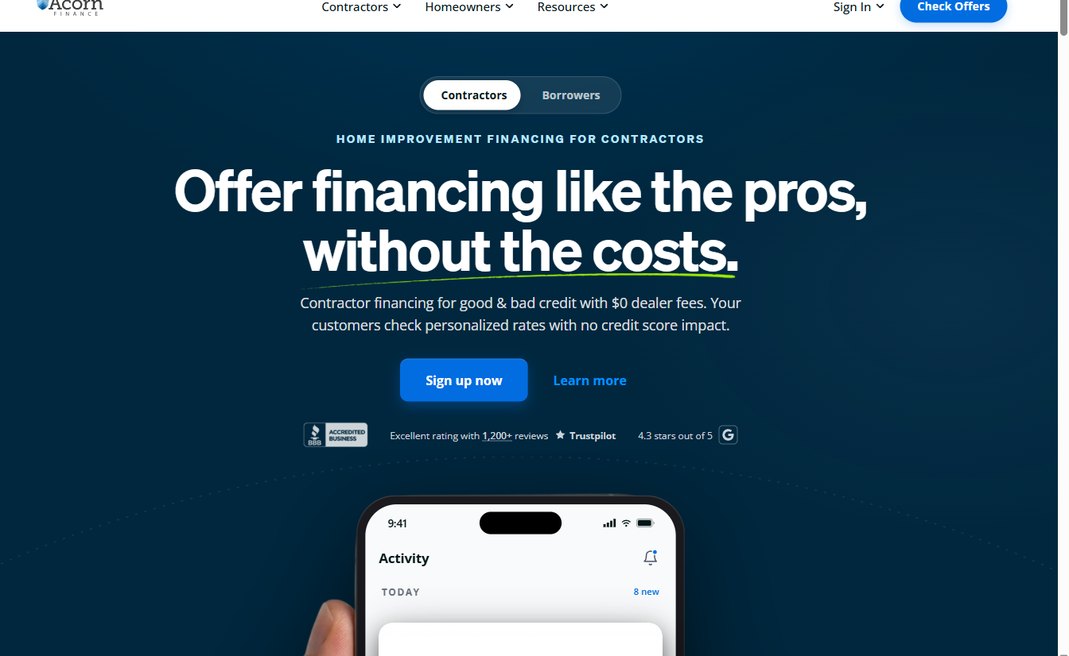
Acorn Finance is a heavy hitter for customers looking to dodge the “hidden costs” that often pop up with contractor financing. They specialize in linking borrowers with various lenders to ensure that dealer fees don’t quietly swallow your renovation budget. Many contractors try to add a 10-20% “financing fee” to your bill if you use their preferred lender.
Acorn Finance works to stop that leak by connecting you directly to lenders. One of their most valuable features is the ability to view personalized rates using only a soft credit check. This is a massive relief for anyone terrified of seeing their credit score dip before they even know if the project is financially viable.
You can use their tools to establish a realistic “budget range” before you even pick up the phone to call a contractor. This approach puts you in a much stronger position during the negotiation phase of your project. It is about entering the room with knowledge rather than just a hopeful guess.
Pros:
- Consumers are not burdened by dealer fees.
- Soft credit checks allow for rate shopping without affecting your score.
- Earning high marks for overall customer experience.
Cons:
- Because they use many lenders, rates can vary wildly between different offers.
4. Wisetack
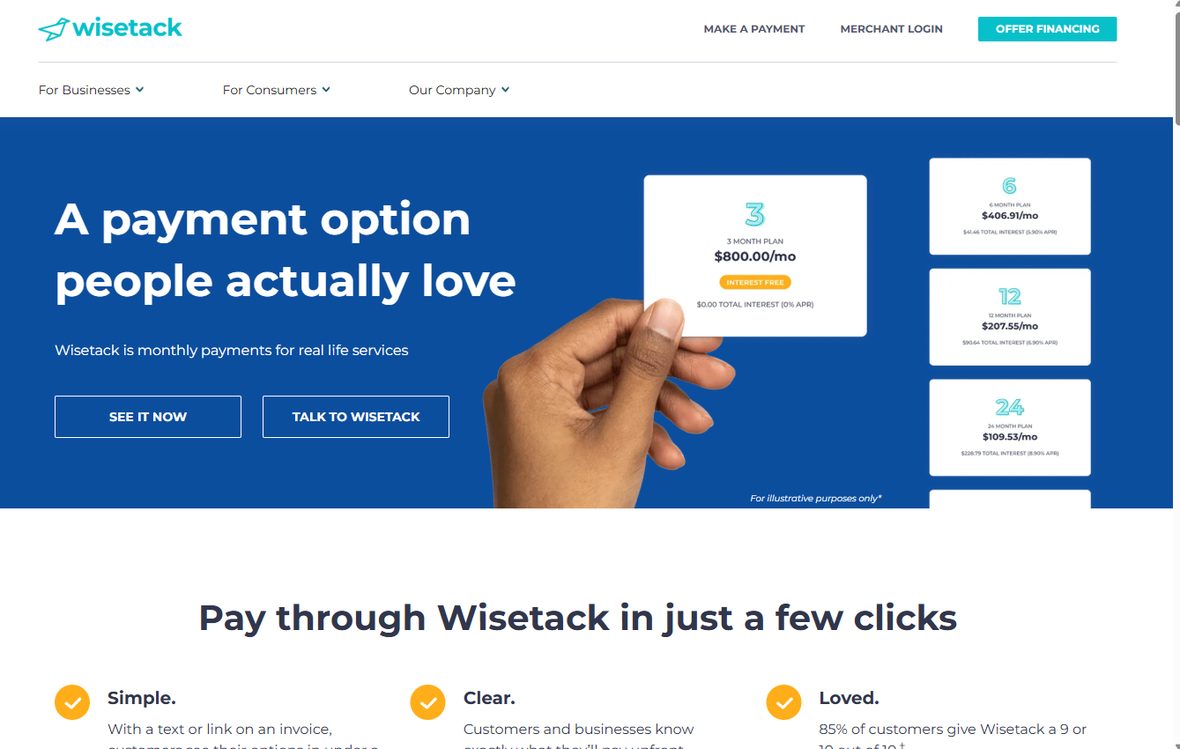
Wisetack is a favorite among service pros because it weaves itself seamlessly into their existing payment systems. This isn’t a traditional bank-focused product; it is more about streamlining the transaction between a homeowner and a professional. For the client, this means much less paperwork and a much more direct experience.
You won’t have to go out on a hunt for a loan. Most likely, your contractor is already set up to offer Wisetack as a standard payment method. If you want to settle your flooring bill via a simple invoice link or a text message, this is the path of least resistance.
For medium-sized renovations, such as a master bathroom or a single large room, their 24-month 0% APR option is a real lifesaver. It allows you to spread out your payments and manage your cash flow without adding any interest to the total cost of the work.
Pros:
- Approvals can happen incredibly fast, often in just 60 seconds.
- Offers 0% APR options for terms reaching up to 24 months.
- Consistently high ratings for customer satisfaction.
Cons:
- Availability and specific terms depend on your contractor’s specific setup.
5. Affirm

Affirm has become a massive name in the “Buy Now, Pay Later” world. It is an incredibly convenient tool for smaller projects or for buying raw materials from big-box home improvement retailers. If you are a DIY enthusiast who just needs $2,000 for luxury vinyl plank, Affirm is often the simplest route.
The flexibility they offer is truly in a league of its own. You can choose between short-term interest-free plans or longer-term monthly payments that are much easier on your wallet. It is a very honest way to shop because you see the exact total you will pay right at the start.
There are no “gotcha” moments or sudden interest rate spikes halfway through your payment schedule. Once the terms are set at the point of sale, they stay locked in. This transparency takes the guesswork out of your household budgeting.
Pros:
- High transparency with no hidden fees or shifting interest.
- Flexible plans, including interest-free options for specific items.
- Very user-friendly through an app or via the web.
Cons:
- Not every flooring professional is set up to accept Affirm.
6. Floor Daddy
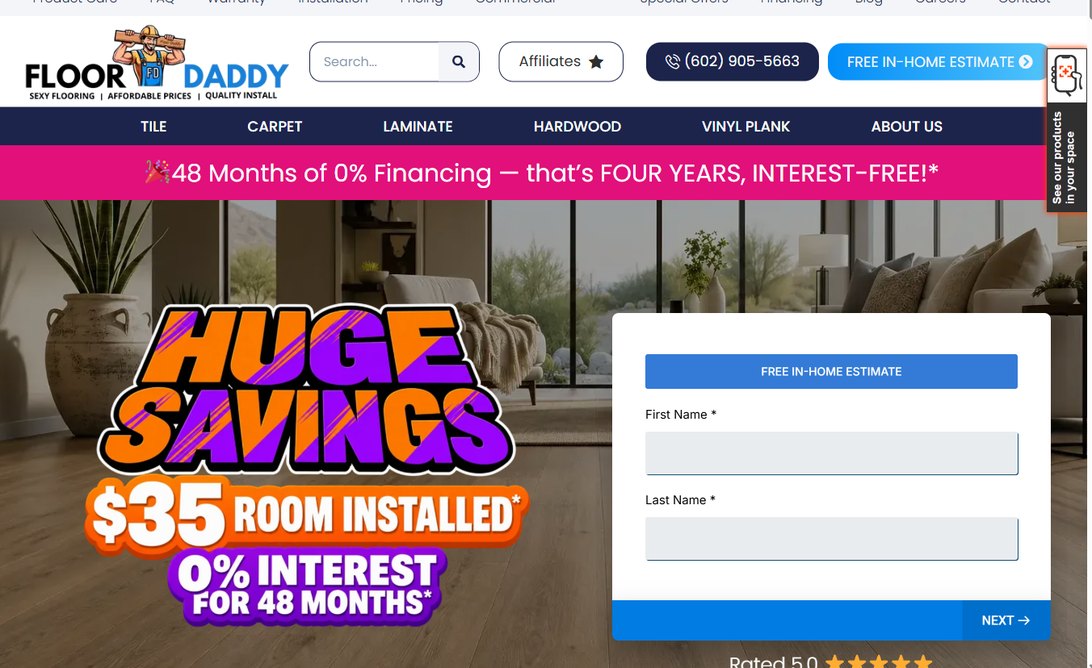
Floor Daddy is a specialized local player that treats financing and installation as two sides of the same coin. This is the perfect setup for someone wanting a “one-stop shop” where your labor and your payment plan are inextricably linked. It removes the fear of paying for materials but running out of cash for the actual installer.
They provide a massive 48-month 0% financing option, which is a rare find in this industry. This allows families to spread the cost of a major renovation over four years without being eaten alive by interest. It makes large-scale home improvements much more attainable for the average family budget.
For a $10,000 renovation, paying $208 every month for four years is a much easier pill to swallow than a massive lump sum. It is a far more manageable way to handle a project than using a high-interest credit card or draining your entire savings account at once.
Pros:
- Long-term 0% financing available for up to 48 months.
- Covers everything from professional floor prep to dustless removal.
- Maintains an impressive 5.0 star reputation.
Cons:
- The financing is generally tied to using their specific installation services.
Evaluating Your Borrowing Options
Before you sign any paperwork, you must grasp the fundamental mechanics of the credit options available to you. Picking an unsuitable lending model can lead to a mountain of debt or even messy tax headaches down the road. Think of it as picking the right tool for a renovation; the wrong one might damage the very house you are trying to beautify.
Each financial path offers a different way to handle your renovation budget. Some move fast like a lightning strike, while others take a slow, methodical approach. It is vital to weigh the pros and cons carefully before you dive into the deep end. Use the breakdown provided below to see which avenue aligns with the scope of your upcoming flooring installation.
| Method of Funding | Ideal Use Case | Primary Danger | Access to Cash |
|---|---|---|---|
| Personal Loan | Managing funds yourself for DIY tasks or various subcontractors | Elevated interest costs for those with lower credit scores | 1–3 Business Days |
| 0% APR Financing | Mid-sized projects utilizing premium, high-end materials | Requires full repayment before the promotional window expires | Instant (at checkout) |
| Home Equity Loan | Extensive, whole-home renovation endeavors | Your physical property serves as collateral for the debt | Weeks to Months |
| Buy Now, Pay Later | Small repairs and individual material purchases | It is quite easy to overspend on minor items | Immediate |
As you weigh these choices, always keep your “exit strategy” in the back of your mind. If you are planning to move out of your house in two years, avoiding a long-term home equity loan is a wise move. These loans attach a lien to your property title, creating a hurdle that must be cleared during the closing process.
On the flip side, if you intend to live in your residence for the next decade, a fixed-rate personal loan might be your best friend. Such a loan offers a predictable, stable method to boost your home’s market value. You won’t have to worry about the stomach-churning volatility often associated with variable interest rates.
Decoding Your Payment Options
Don’t let a tiny monthly bill fool you into a bad deal. You might think a five-year plan looks easy on the wallet, but those extended terms can actually inflate the final price tag. It is easy to get lost in the weeds of small installments while ignoring the bigger picture.
Before you put pen to paper, demand to see the “Total Cost of Borrowing.” This specific figure reveals the true weight of your debt. When you are standing between two different banks, this is the only metric that actually matters for your bank account.
Think of it like buying a car; a low monthly rate might just mean you are paying for the metal for a much longer time. Always prioritize the total sum over the immediate ease of a small payment. It is the difference between a smart investment and a lifelong debt trap.
Many homeowners fall into the trap of believing “no credit check” means zero impact on their rating. While it is true that looking at your rates might not hurt, the actual application usually triggers a formal check. You have to dance with the credit bureaus eventually.
I always tell my clients to hunt for soft-pull options first. This allows you to shop around like a savvy consumer without risking your reputation. If you go too heavy on hard inquiries in a single month, banks might think you are desperate for cash.
That “credit hunger” can cause your interest rates to skyrocket instantly. A single inquiry might only nudge your score down by 5 points, but a flurry of them looks suspicious to lenders. Protect your score by being methodical rather than impulsive during your search.
Once you start ripping up old carpet, the ghosts in your subfloor might appear. Contractors often find rot or crooked joists hidden beneath the surface. If your budget is razor-thin, these little surprises will turn into massive financial headaches very quickly.
It is much simpler to secure a larger sum upfront than to ask for more mid-project. Trying to expand a loan while the tile is being laid is a recipe for stress. You want to have your budget locked in before the first hammer swings.
I recommend adding a 15-20% “contingency buffer” to your initial request. This extra cushion acts as a safety net for those inevitable construction hiccups. Planning for the worst-case scenario ensures your home renovation stays on track and within your means.