

Last updated: 2026-11-05
Trying to get a loan when your credit score is low feels like an uphill battle. Most big banks want a perfect history, which leaves a lot of people stuck with massive interest rates or straight-up denials. This guide looks at real options for anyone needing to bridge a financial gap without being punished for past mistakes. Whether you are facing an unexpected medical bill, looking to consolidate high-interest credit card debt, or trying to fix a vehicle to get to work, understanding your landscape is the first step toward stability.
1. Sunward
2. Micro Loans Hub
3. Vanquis
4. Acorn Finance
5. Upgrade
6. LendingPoint
7. Avant
When you’re shopping around, keep an eye on the total cost of borrowing. A low monthly payment looks great on paper, but high interest rates can make the loan much more expensive by the time you’re done paying it off. For example, a $5,000 loan at a 15% APR over 36 months costs significantly less in total interest than the same loan at 28% APR over 48 months, even if the 48-month monthly payment seems more manageable. Always compare the APR (Annual Percentage Rate) rather than just the monthly installment. Also, make sure the lender is legitimate so you don’t run into common scams.
How We Evaluated These Lenders
We looked specifically at how these companies handle applicants with non-traditional or poor credit histories. We wanted lenders that offer clear terms, transparent applications, and options that won’t tank your credit score during the inquiry phase. We prioritized providers that use “soft” credit pulls for initial quotes, which allow you to see your potential interest rate without leaving a hard inquiry on your report.
Our comparison focuses on loan amounts, how fast you can get the money, and whether the service works for specific needs like home improvements or debt consolidation. We wanted to see which providers offer a path forward without hidden fees or endless paperwork. We also assessed the breadth of their financial ecosystems, whether they just provide a one-time loan or offer ongoing tools like savings accounts or credit-building cards.
| Lender | Loan Amount Range | Speed/Process | Specialty/Focus |
|---|---|---|---|
| Sunward | see site | Instant pre-qualification | Member-friendly rates |
| Micro Loans Hub | $500–$50k | 2 min online request | Comparison of trusted lenders |
| Vanquis | see site | see site | Credit building |
| Acorn Finance | see site | 2 min offered | Contractor/Home improvement |
| Upgrade | up to $50,000 | Fast funding | Debt consolidation/Large purchases |
| LendingPoint | $1,000, $36,500 | Fast decisions | Personal financial needs |
| Avant | see site | see site | Flexible solutions |
1. Sunward
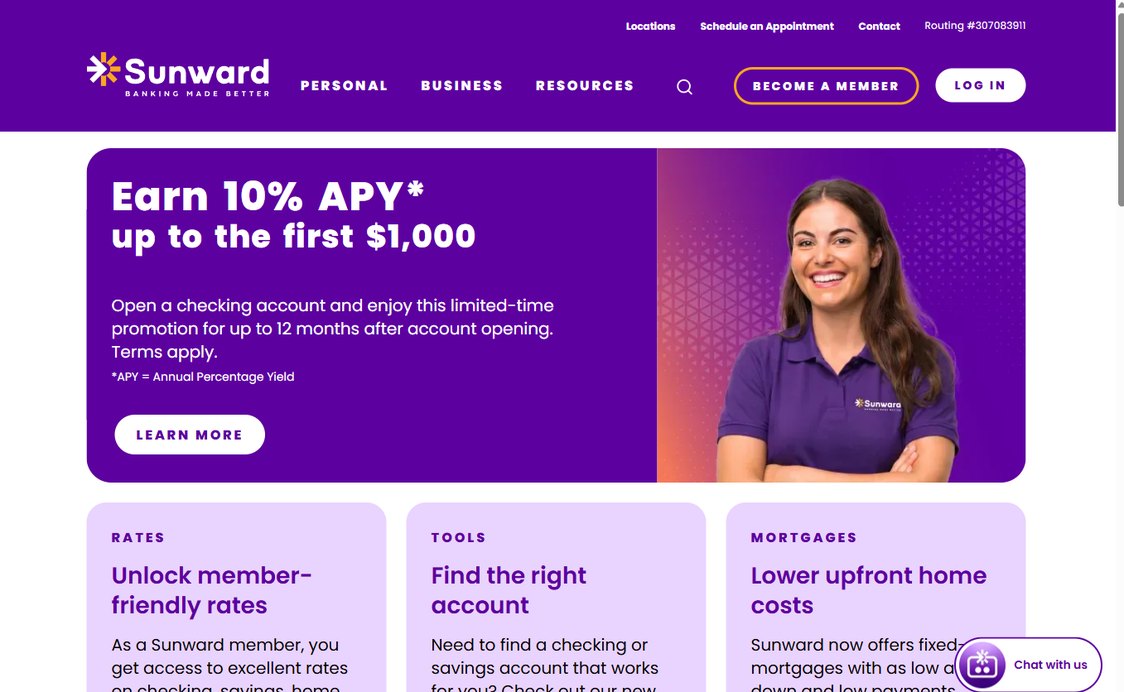
Sunward is a credit union, so they don’t work exactly like the big banks. Because credit unions are member-owned non-profits, they often have different lending criteria and lower overhead costs than massive national banks. This structure allows them to offer a range of products like checking, savings, and loans with a focus on service rather than maximizing shareholder profit. Because of their structure, members get access to specific rates that are often more favorable than those found at commercial retail banks.
They have a comparison calculator to help you see which account or loan fits your budget. This is particularly useful for members trying to balance monthly debt obligations with long-term savings goals. If you’re looking to buy a home, they also do fixed-rate mortgages with relatively low down payment requirements, providing a pathway to homeownership even for those who don’t have a massive cash reserve on hand.
Pros:
- Access to member-only rates
- Pre-qualification doesn’t impact credit score
- Offers mortgage and savings products too
Cons:
- Requires membership to access best rates
2. Micro Loans Hub
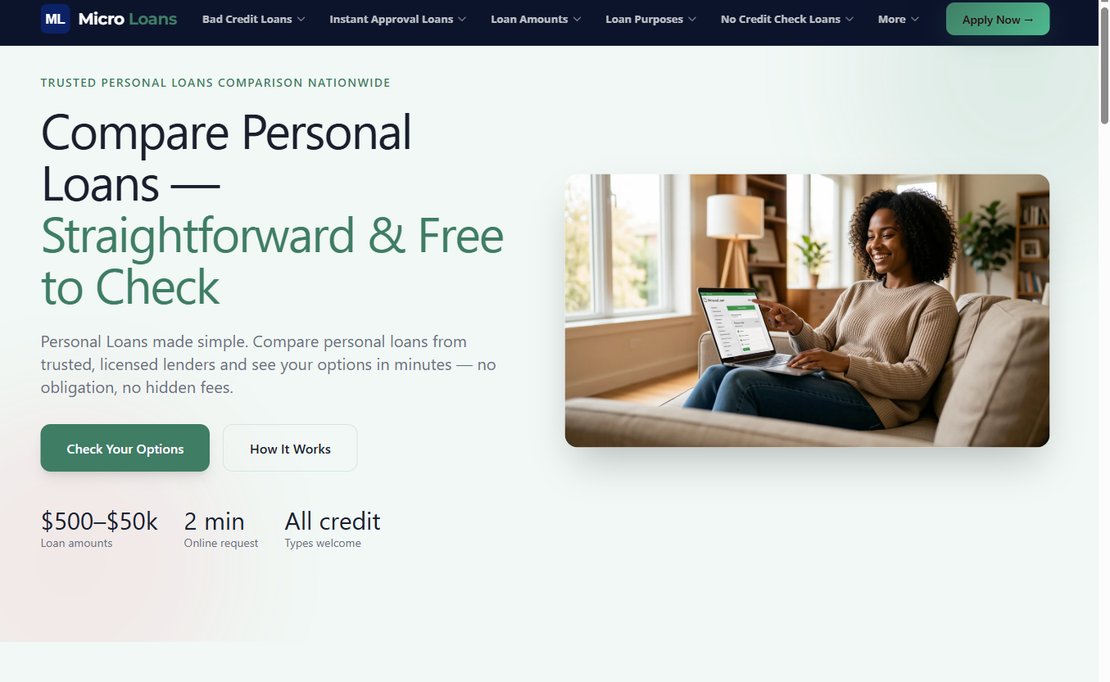
This service is a middleman. Instead of being a single lender, they connect you to a network of licensed lenders so you can compare different offers. It’s meant to be a straightforward way to find options without the headache of filling out twenty different applications for twenty different banks. This is particularly beneficial for those with subprime credit who may find that a single direct application is met with an immediate denial; by using a network, you increase your chances of finding a niche lender that fits your specific profile.
The application takes about two minutes and shouldn’t affect your credit score. It’s a good starting point if you’re looking for micro loans for bad credit or larger amounts between $500 and $50,000. This makes it an excellent resource for people needing “bridge” money, funds intended to cover a specific, immediate expense like a car repair or an unexpected utility bill.
Pros:
- Fast comparison process
- No impact on credit score during initial request
- Wide range of loan amounts
Cons:
- You are seeing offers from multiple lenders rather than one direct source
3. Vanquis
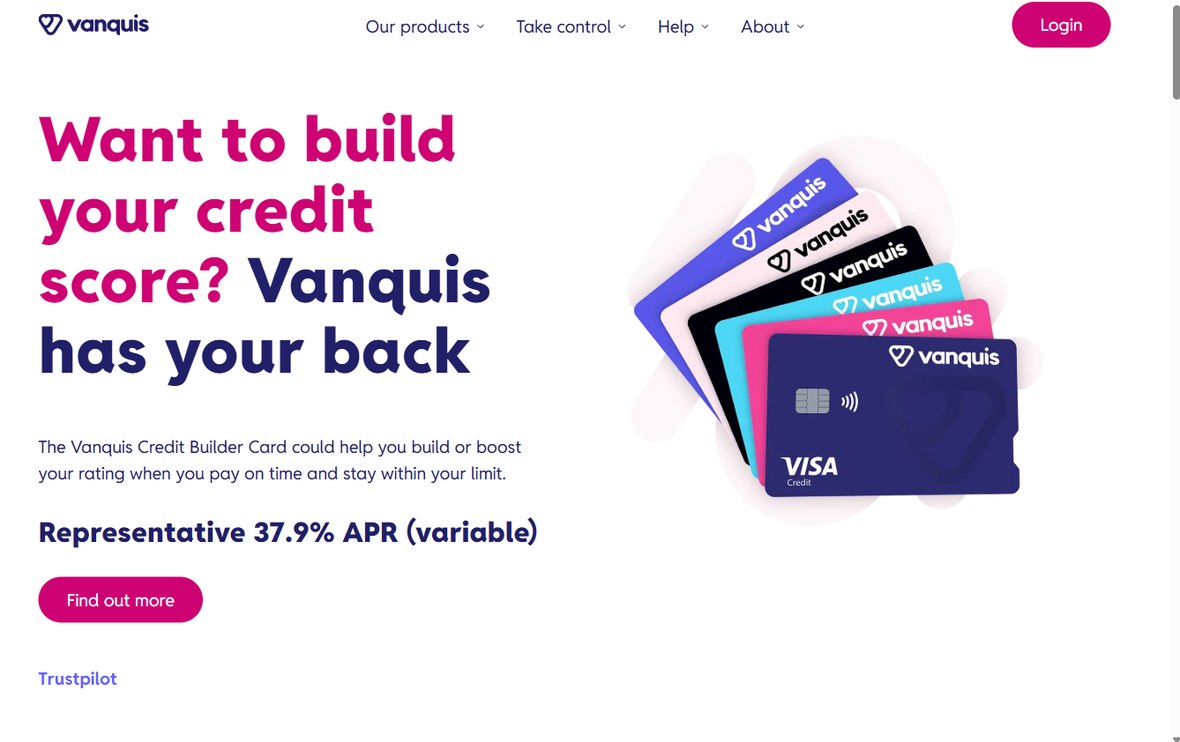
Vanquis focuses heavily on credit building. Their Credit Builder Card is made for people who want to improve their rating by making consistent, on-time payments. Unlike traditional credit cards that might have lower limits and higher scrutiny, these cards are designed specifically to help you establish a positive payment history, which is the most significant factor in your overall score.
Aside from credit cards, they offer vehicle finance and savings accounts. Their savings options allow you to earn interest while staying protected by the Financial Services Compensation Scheme. This is a dual-benefit approach: you can work on repairing your credit through their cards while simultaneously building a small emergency fund in one of their savings products.
Pros:
- Strong focus on credit score improvement
- High-interest savings options available
- Large, established customer base
Cons:
- High representative APR on credit cards
4. Acorn Finance
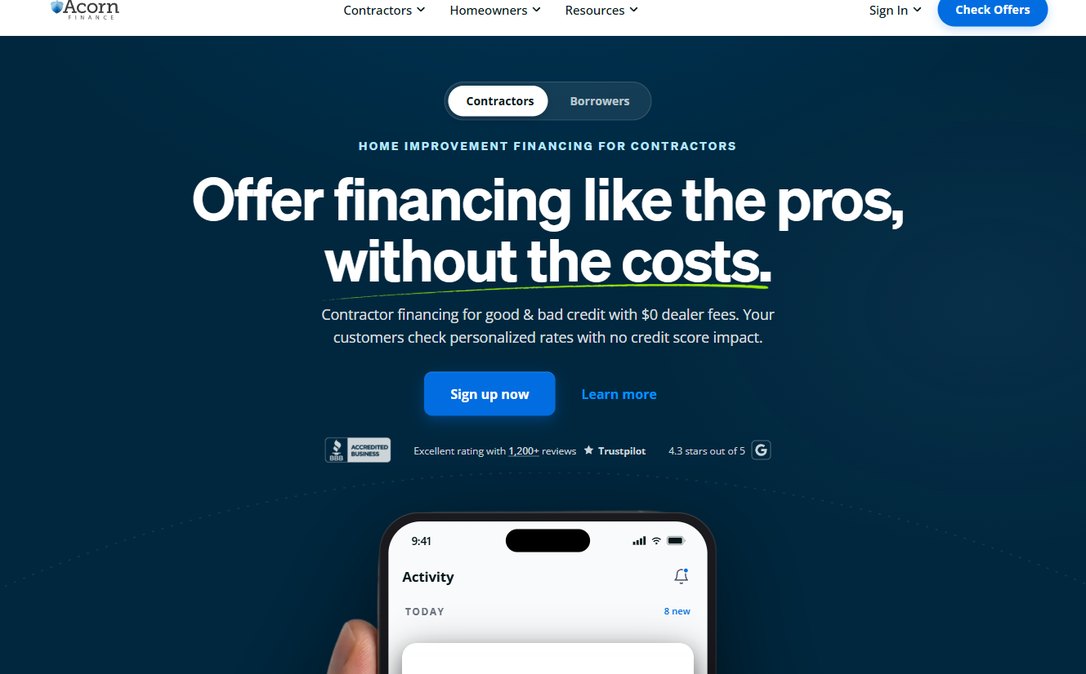
Acorn Finance isn’t a traditional personal loan provider for everything. They specialize in contractor financing, which is for people needing money for home improvements like pool installations, kitchen remodels, or HVAC replacements. Instead of taking out a general-purpose personal loan that might have higher rates, Acorn helps you find financing specifically tailored to the needs of home renovation projects.
They offer $0 dealer fees and let you check personalized rates without hurting your credit score. Their whole model is about connecting homeowners with financing built for renovation projects. This is a critical distinction for homeowners who want to increase their property value through upgrades but don’t have the liquid cash available to pay a contractor upfront.
Pros:
- Specialized for home improvement
- No credit score impact when checking rates
- No dealer fees
Cons:
- Limited to contractor-related financing
5. Upgrade
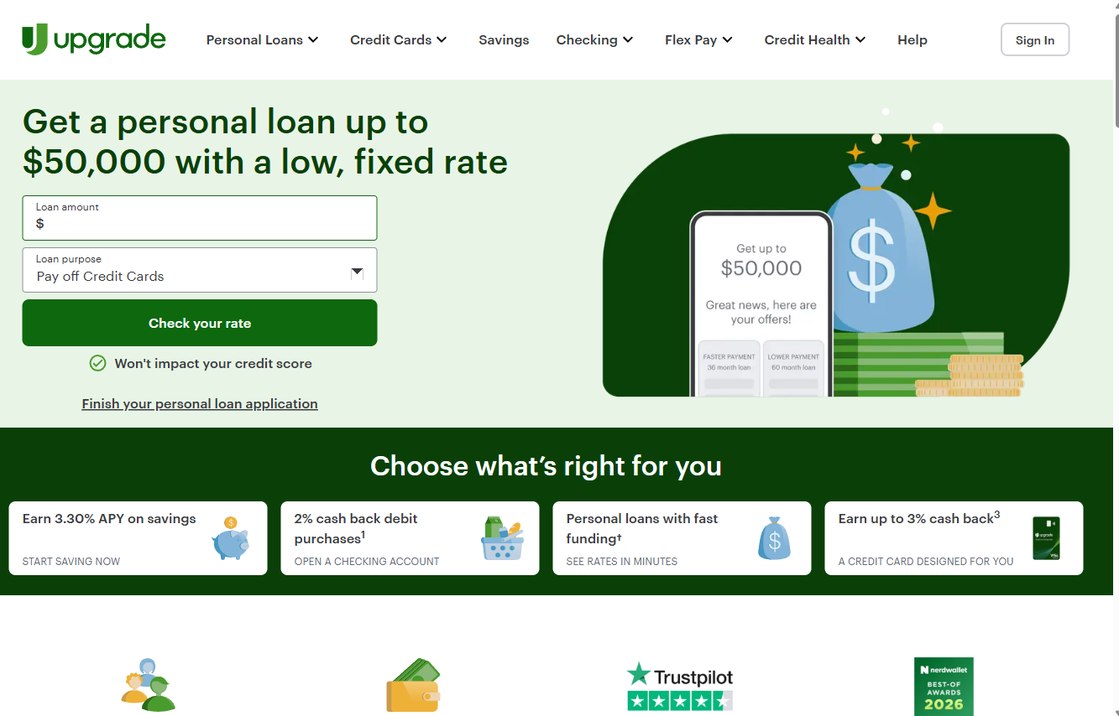
Upgrade is a versatile option if you need up to $50,000. They cover several needs, including debt consolidation, business costs, or large purchases. If you are currently juggling multiple credit card payments with various due dates and different interest rates, using an Upgrade loan to consolidate those into one single monthly payment can significantly simplify your financial life and potentially lower your total interest expense.
The process is fast; you can see rates in minutes. They also offer a “Flex Pay” option and have over 8.5 million customers using their services. This scale suggests a robust technological backend, meaning their approval decisions are often automated and much faster than traditional bank loan processing.
Pros:
- Fast funding and quick rate checking
- High maximum loan amount
- Multiple financial products in one place
Cons:
- Complexity of multiple product types
6. LendingPoint

LendingPoint offers loans from $1,000 to $36,500. They cover things like medical expenses, weddings, or taxes. Their platform is designed to be easy with quick decisions. They are particularly well-suited for those who have a clear, singular purpose for the money and want a streamlined experience from application to funding.
They emphasize that checking your rate won’t hit your credit score. This lets you explore options for debt consolidation or unexpected costs without any risk. This “no-risk” exploration is vital when you are trying to budget for a specific event and need to know exactly what your monthly commitment will be before you commit to the loan.
Pros:
- Specific loan purposes covered
- No credit score impact for checking rates
- Flexible loan amounts
Cons:
- Maximum loan amount is lower than some competitors
7. Avant
Avant provides both personal loans and credit cards. Their loans are built for debt consolidation, emergency expenses, or home improvements. They try to provide flexible choices for different financial situations, acknowledging that a one-size-fits-all approach rarely works in the complex world of personal finance.
The company positions itself as a tool to help users move forward. They offer solutions for different stages of life, from small emergency loans to larger installment loans. This scalability makes them a useful partner for someone whose financial needs might evolve from a small short-term fix to a larger long-term financial restructuring.
Pros:
- Flexible loan types available
- Focus on moving toward financial goals
- Online application is straightforward
Cons:
- Lacks specific details on interest rate minimums
Common Pitfalls to Avoid When Borrowing
When you are in a position where you need money quickly, it is easy to overlook the fine print. To avoid long-term financial distress, keep these three rules in mind:
- Beware of “Prepayment Penalties”: Some lenders charge you a fee if you pay the loan off early. This sounds counterintuitive, but they do it to ensure they collect all the interest they planned for. Always look for “no prepayment penalty” in the contract.
- Understand the “Total Cost of Loan”: If you borrow $5,000 and pay it back over 5 years at a high interest rate, you might end up paying $8,500 total. Always ask: “What is the total amount I will have paid by the time this is finished?”
- Watch Out for “Add-on” Interest: Some predatory lenders use simple interest rather than compound interest, or they add fees to the principal amount before calculating interest. This can make the actual rate much higher than the advertised APR.
How to Choose a Loan
Before you sign anything, make sure you understand the total cost. It’s a good idea to check your credit score and report first so you know where you actually stand. This makes it easier to understand why you’re seeing certain rates. If there are errors on your report, such as a debt that isn’t yours or an incorrectly marked late payment, disputing those can raise your score and potentially lower your interest rates before you even apply.
Don’t make the mistake of picking a lender just because the monthly payment is low. If you stretch out the loan term to make payments smaller, you’ll end up paying much more in interest over time. For example, a 60-month loan might feel easy on your weekly budget, but the cumulative interest can be double what a 36-month loan would cost. Look for lenders that let you pay the loan off early without penalties if your money situation gets better. This flexibility is the ultimate tool for moving from a position of debt to a position of financial freedom.